Today I watched a documentary about the birth of Java! Talk of Netscape and the beginning of the Web as we know it today! And I found it incredible how, even back then, between 1990 and 2010, there were so many important cycles in technology that built the foundation for everything we use today.
People love to say frontend is dead. I remember that in 2012 I did a take-home challenge for a job opening where all I had to do was style an HTML table with pure CSS to match a reference design they sent me. I passed, and once I got in, my actual job was basically rebuilding a legacy vtex interface with jQuery, assembling a brand-new HTML structure so we could do more advanced customizations.
It was a short gig I had at Underdogs in Curitiba, on their TIM account, and it was fun. But was that really frontend? Even back then, frontend in that vtex context was completely locked inside vtex's own ecosystem.
Frontend only existed there because the vtex platform existed. So what actually got me hired, let's be honest, wasn't frontend being some amazing profession on its own, it was the huge demand for custom e-commerce built exactly the way the client wanted it.
Well, 14 years later! WOW! I'm getting old. But 14 years later, and give or take 3 years since the rise of LLM-based AI, it's pretty common to hear people say frontend is dead.
Even the King of JavaScript agrees:
is there such a thing as being hired just for knowing enough CSS and HTML and JavaScript for web pages manipulation etc in 2026?
Like, creating forms, improving responsive page layouts, improving the page speed and ux this kind of stuff
those days are gone 🥲
See the full conversation on X
But think about it!! TODAY in 2026 there are WAY more people building frontend than in 2020, back when there was no AI available to everyone that could write code for you.
Today way more websites are being created, way more website migrations are happening, and I see that the frontend role may have shifted a bit, but its nature is still intact: giving people content through the web.
Just last week, I migrated a 42-post blog to a brand-new system, using a ton of AI to save, export, and import everything into the new project.
My therapist built his entire website on lovable, and I gave him a bunch of feedback on it.
So I do believe the frontend engineer as a profession (the person who actually understands how pages get distributed, rendered, advanced form validation, advanced API usage, performance, security, standards) is still very important, because the structure that professional puts together is often enough for 50 to 100 people to build on top of.
Plenty of new titles showed up: platform engineer, systems engineer, design engineer, and we're clearly at the peak of a shakeup inside companies, people stacking roles, rediscovering how to produce and be productive.
But one thing is still very relevant: staying on top of performance, security, building a consistent site with consistent design, avoiding the annoying bugs from in-app browsers that are so popular on mobile these days, even strategies to make it easier for AI systems to navigate a site and carry out tasks and navigation, etc.
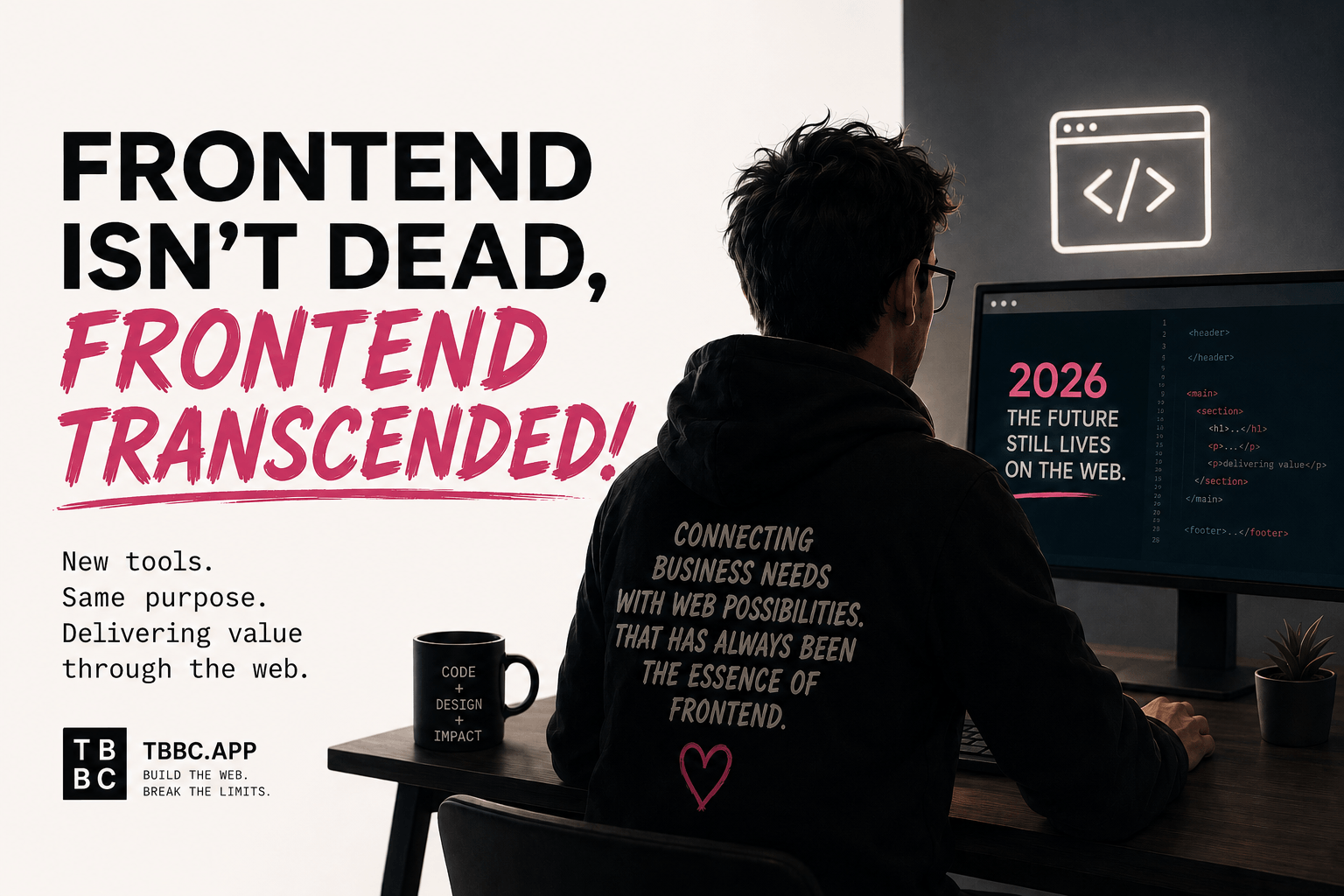
All of that requires mastery of the web platform. And to me, being frontend, since the beginning of my career, has always been about connecting the business needs of whoever I work for with the possibilities of web APIs and the capabilities available on the web platform.
A lot of web devs turned to multi-platform work, native apps with Cordova, remember that? I learned Angular 1.5 with Ionic building a social network in 2014, and that got me a job at pagar.me in 2016! Then came React Native. Maybe I'll write a whole blog post just about the importance of multi-platform on the web, and the difference between iOS and Android.
Knowing how to connect the WEB platform's APIs with a company's business needs to speed up processes has always been the dream.
I always wanted to work on digital products. Mãeguru was the first big social network for moms where I worked on building the entire app; it reached 85 thousand sign-ups at the time, with more than 200 posts a day on our platform. And was I really doing frontend back then?
So, as much as people say frontend is dead, sure, frontend as it was in 2016 is dead. But in 2026 we've never seen so many non-experts building systems for the web, frontends that require special care that only a talented, available person can provide.
So I'd like to double down on frontend starting in 2026.
I want to keep the same pace, building applications for different platforms, chasing that product-market fit, or trying to better understand how people use interfaces so I can keep improving them according to each company's, each business's, KPIs.
I LOVE frontend, and I'm not defending building sites the way we did in 2016, I'm defending building sites in 2026 with the same goals of performance, usability, best practices, and standards we were already studying well before 2016!
Today I see that DESIGN is where LLMs are shining the most. On the code side, though, building a platform that actually delivers results is still a process where only cutting the diamond, facet by facet, gets you to the best results.
Want help evolving and cutting your diamond? Let's talk! Visit my site and get in touch
Thanks for reading, friend! Written with love by Ofelquis! <3